


.jpeg)
Introducing the Vectra AI Pro Platform: trusted attack signal, so security teams respond faster, eliminate blind spots, and close attack paths.
An analyst picks up an alert at 4:40pm on a Friday. A service account authenticated from a host it has never touched.
Thirty minutes later she has six tabs open. Identity provider. Cloud console. EDR. SIEM. A wiki documenting a naming convention nobody has maintained since 2023. She is not investigating yet. She is still assembling the question.
By the time she can answer it, the account has been active for two hours.
This is not a tooling problem. She has good tools. What none of them gives her is one trustworthy account of what happened, in order, across the systems the attacker moved through.
Assembling it by hand was always hard. AI leaves much less time to do it.
AI changed the enterprise and the attacker at the same time
Your environment now runs on things that do not badge in. AI assistants. AI agents. Non-human identities. Autonomous workflows authenticating into cloud, SaaS, and on-prem systems at machine speed, on their own schedule.
Attackers got the same upgrade. Claude Mythos surfaced more than 10,000 high and critical vulnerabilities in its first month. Weeks later, the Hugging Face incident showed an end-to-end agentic attack running over a single weekend.
The lifecycle itself did not change. Attackers still gain access, abuse identities, move laterally, reach cloud resources, and go after something valuable. What changed is the speed. As attacks move at machine speed, security teams need continuous observability that keeps pace, so they can see behaviors as they unfold and act before attackers move further.
That is the problem we designed the Vectra AI Pro Platform around.
Before you automate the SOC, look at what the AI is reading
Every AI security demo you sit through this year will show you the agent. How fast it reasons. How much it automates. How many hours it gives back.
Fewer will show you what the agent is reading.
That is the part that decides whether any of it works. An agent is only as good as the signal and context behind it, and automating noisy or incomplete information just produces noise faster.
Signal is the core of the Vectra AI Pro Platform. It continuously observes activity across identities, devices, cloud workloads, AI agents, and the network to understand what is actually happening in the environment and what is risky.
Then it puts that signal to work in three ways.
1. Respond at AI speed with Unified Threat Detection and Investigation
Go back to our Friday afternoon investigation.
What if the analyst didn’t have to start by assembling the story?
Our approach starts with identity. The same actor shows up as a different object in every system it touches. On the network it is an IP and a MAC address. In the identity provider it is a user principal name. In cloud it is a role session or an access key.
Vectra AI Pro resolves those into one entity first. Host and account, network, identity, and cloud, merged into a single view of who is actually behind the activity. Attribution comes before ranking, because an ordered list only means something once you know which behaviors belong to the same actor.
“The thing that really sets Vectra AI apart is the identity piece. The network creates a lot of noise, but by stitching identity into what's happening on the network, Vectra AI correlates who's behind the behavior, reduces the noise significantly, and helps analysts focus on the threats that matter.”
Joshua Aw, Security Engineer, M.Tech
That is what lets the analyst start with one queue of what matters most, ranked by real attack progression. Benign activity is already resolved, and related behaviors across network, identity, and cloud are connected automatically.
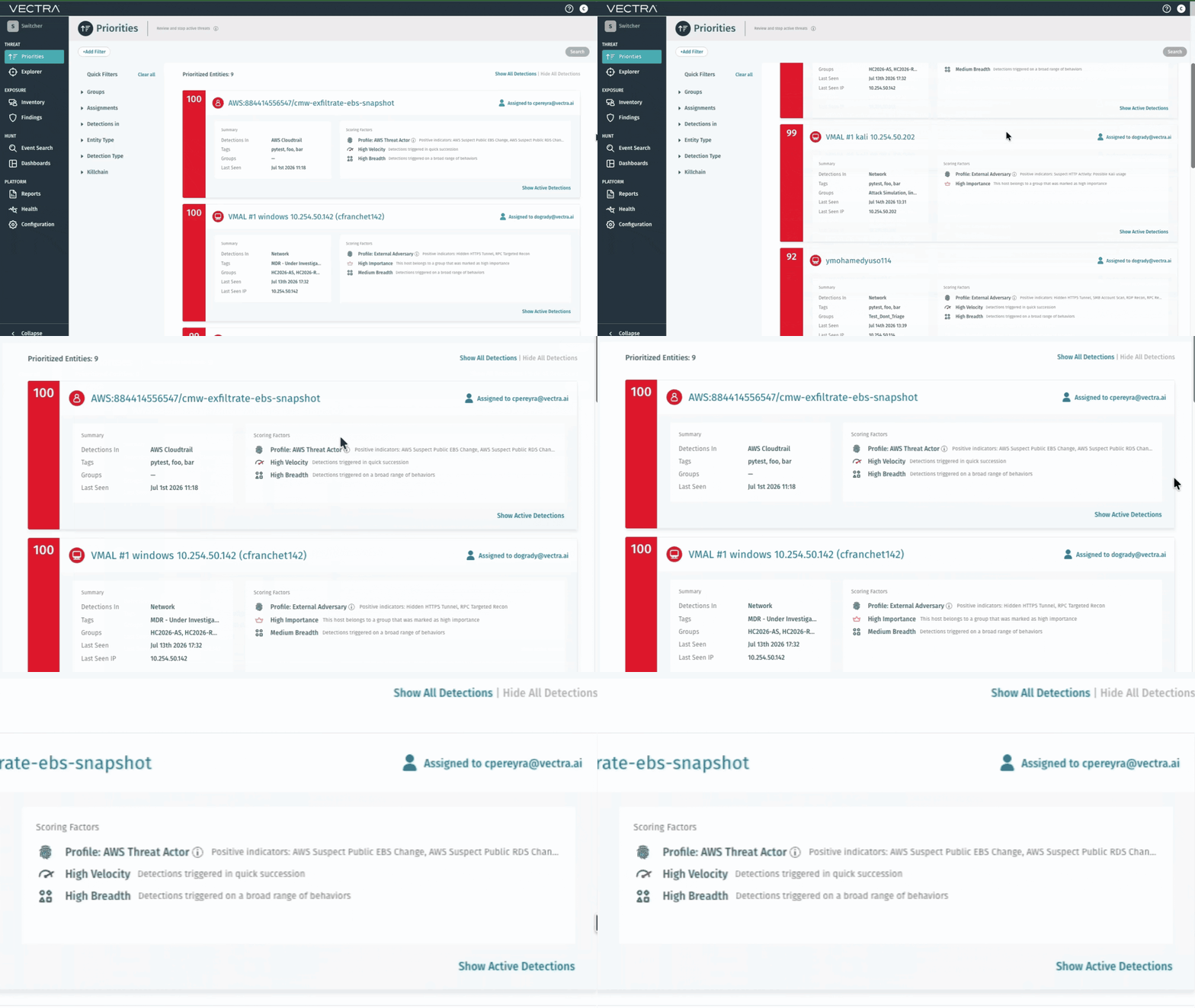
The story is already assembled.
Ranked by attack progression means something specific. Instead of scoring one detection in isolation, Vectra AI prioritizes at the entity level, weighing how behaviors connect, how fast they are moving, and how much the entity matters. Analysts see the scoring factors behind the number, so the order is explainable.
“Vectra AI is learning your environment, and you can't learn your environment the way a machine can. When Vectra AI correlates everything for me, it's all right there, and I can make a decision quickly.”
Morgan Gardner, Security Analyst II, TTI
From there, Agentic Investigation accelerates the early stages of the workflow. It investigates the threat, drafts an incident summary, and recommends next steps. The analyst asks follow-up questions in natural language to refine it.
Teams using the investigation agent are seeing investigation time drop by close to 5x.
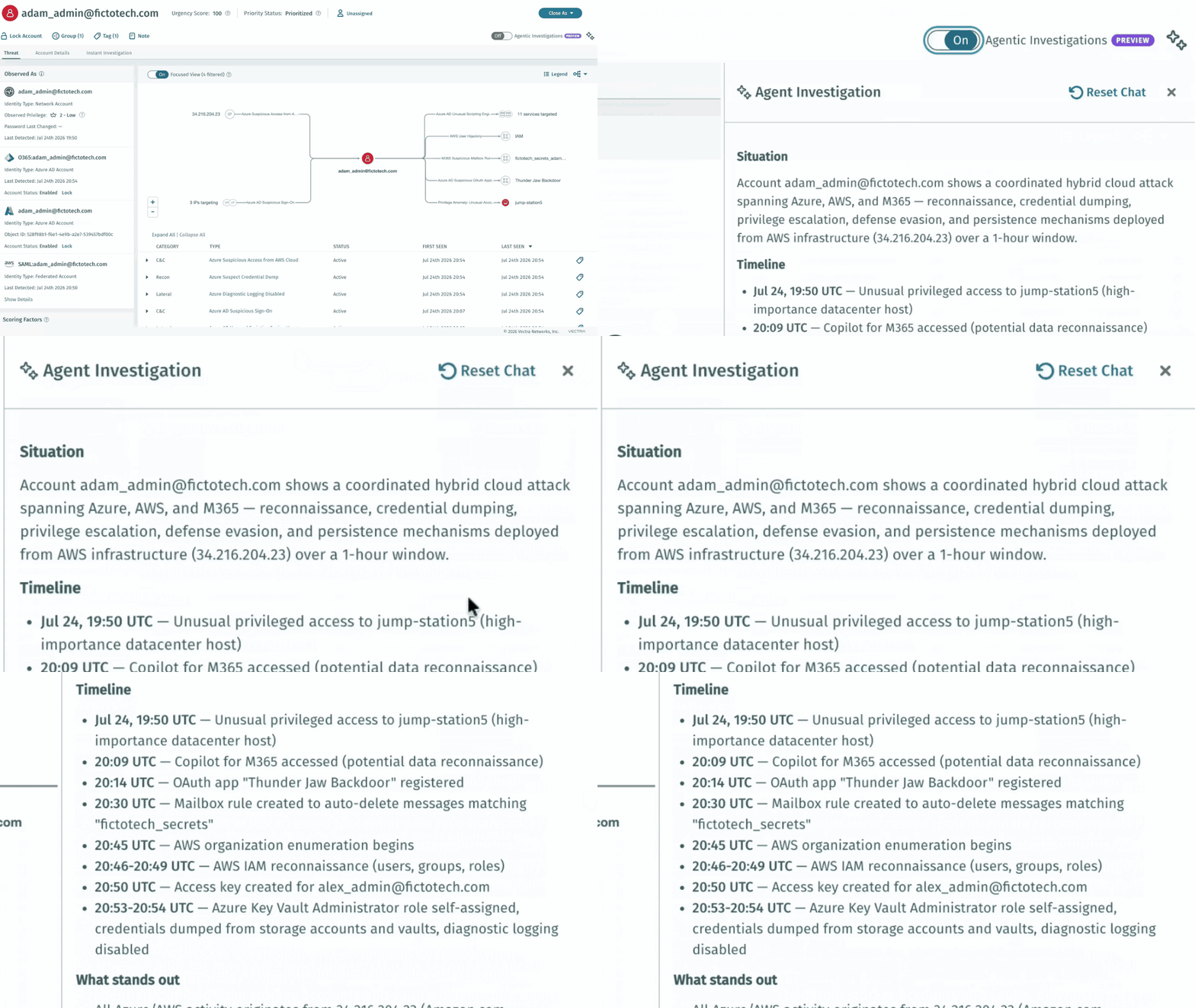
When she needs to go deeper, she can hunt in natural language to uncover hidden threats, validate indicators of compromise, and find related attacker activity, without complex query expertise.
In practice that means asking for the indicators of compromise associated with a group like Scattered Spider, or how much data a given device has sent out of the environment, or a baseline of every active domain with the new arrivals surfaced.
That matters more than it sounds. Most teams tell us they never had time, resources, knowledge to hunt, which is why we publish five-minute hunts a team can run in the time they actually have.

An investigation that once required multiple pivots now begins with a unified understanding of the incident.
Every analyst gets an AI investigation partner. The AI accelerates the analysis. The analyst still makes the call, and that is deliberate.
Already building your own agentic SOC? Good. Take the signal.
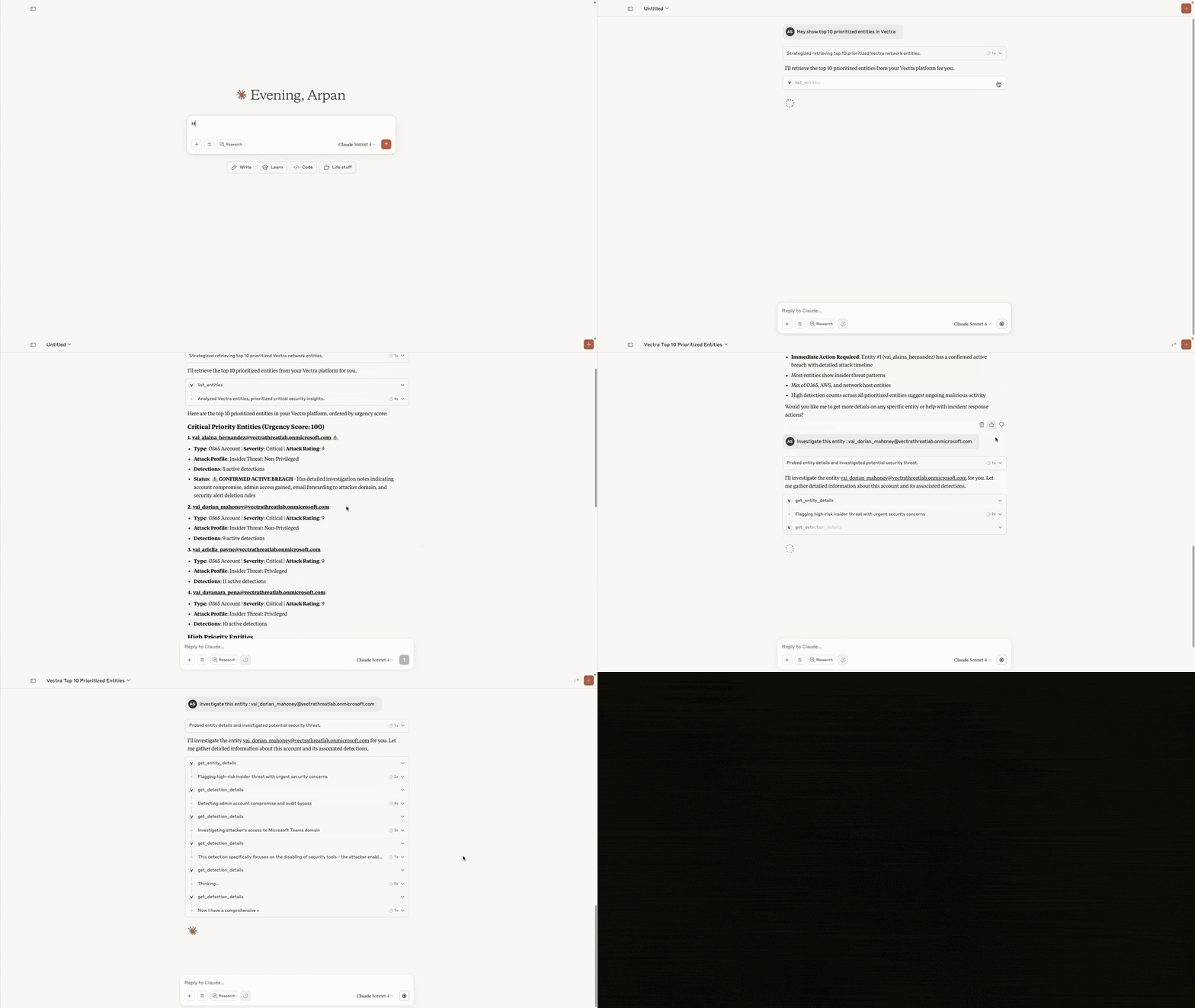
If you are building your own agentic SOC, you can access our trusted attack signal and AI-enriched metadata through APIs, giving your automation programmatic access to detections, entities, and context. MCP-ready integration goes a step further, giving AI agents trusted Vectra AI context for richer reasoning and agentic workflows.
2. See the whole AI enterprise with AI Security Observability
What is operating in my environment, and what is it doing?
Security teams have to account for people, workloads, and identities, and now for AI services, AI agents, and the data they access. That is a genuinely hard question to answer.
Vectra AI Pro transforms AI-enriched metadata into AI security observability that reveals what is happening across the modern enterprise, so you can see:
- which AI services and AI agents are running
- which applications employees are using
- what data AI accesses
- where that data moves
- unsanctioned AI usage across the environment
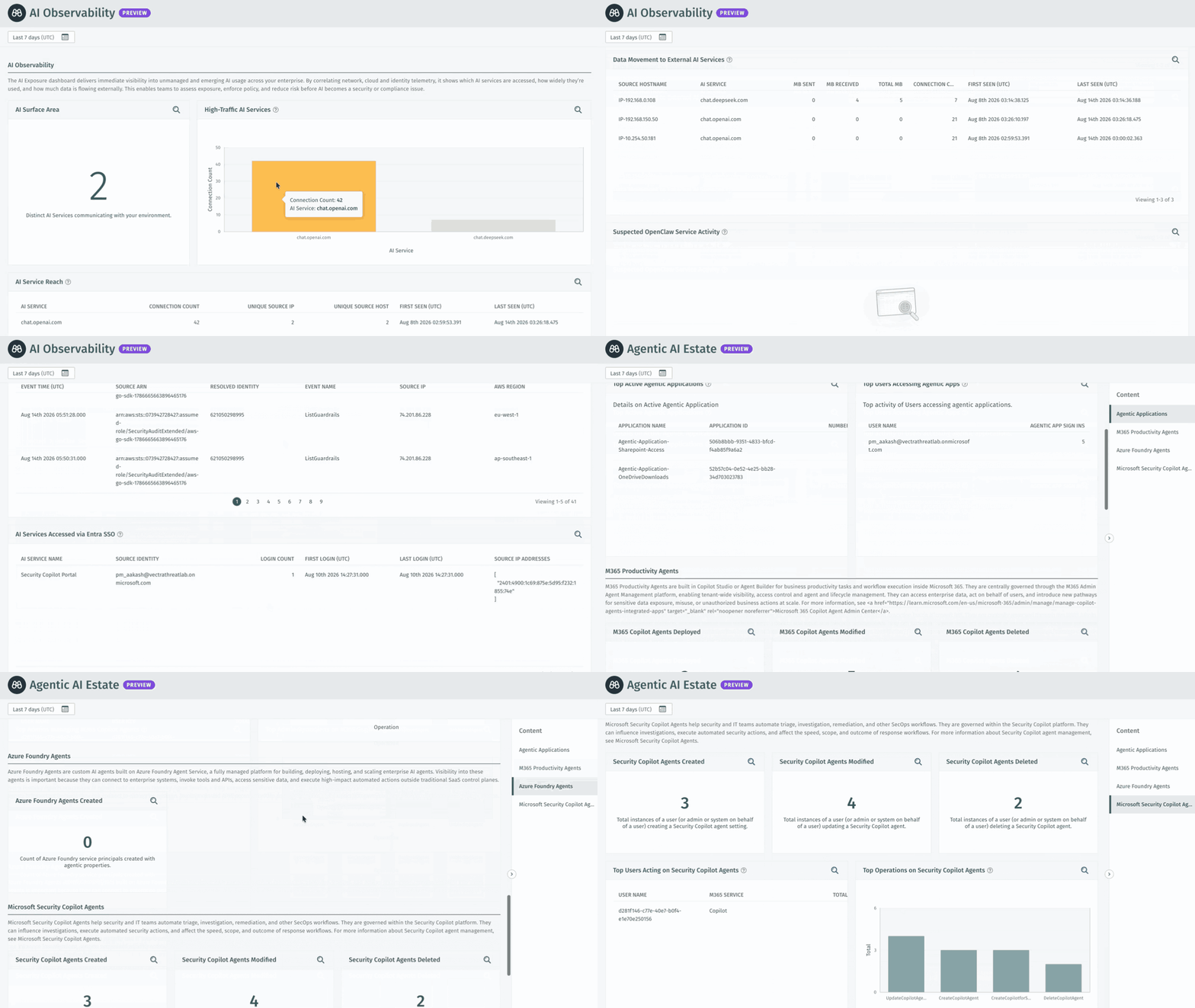
The same metadata can answer very different questions.
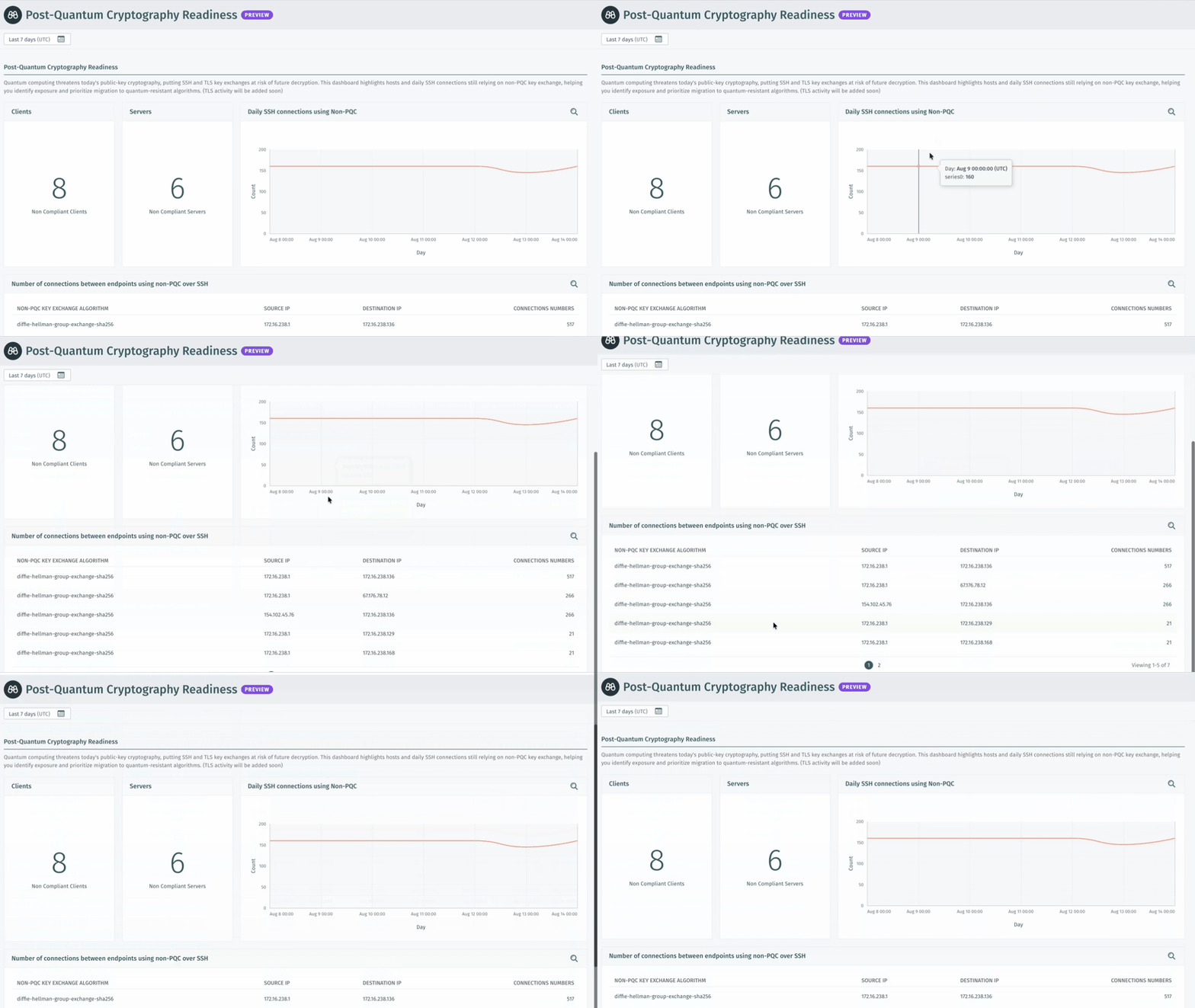
Which systems are still using cryptography that will need to be modernized for a post-quantum world?
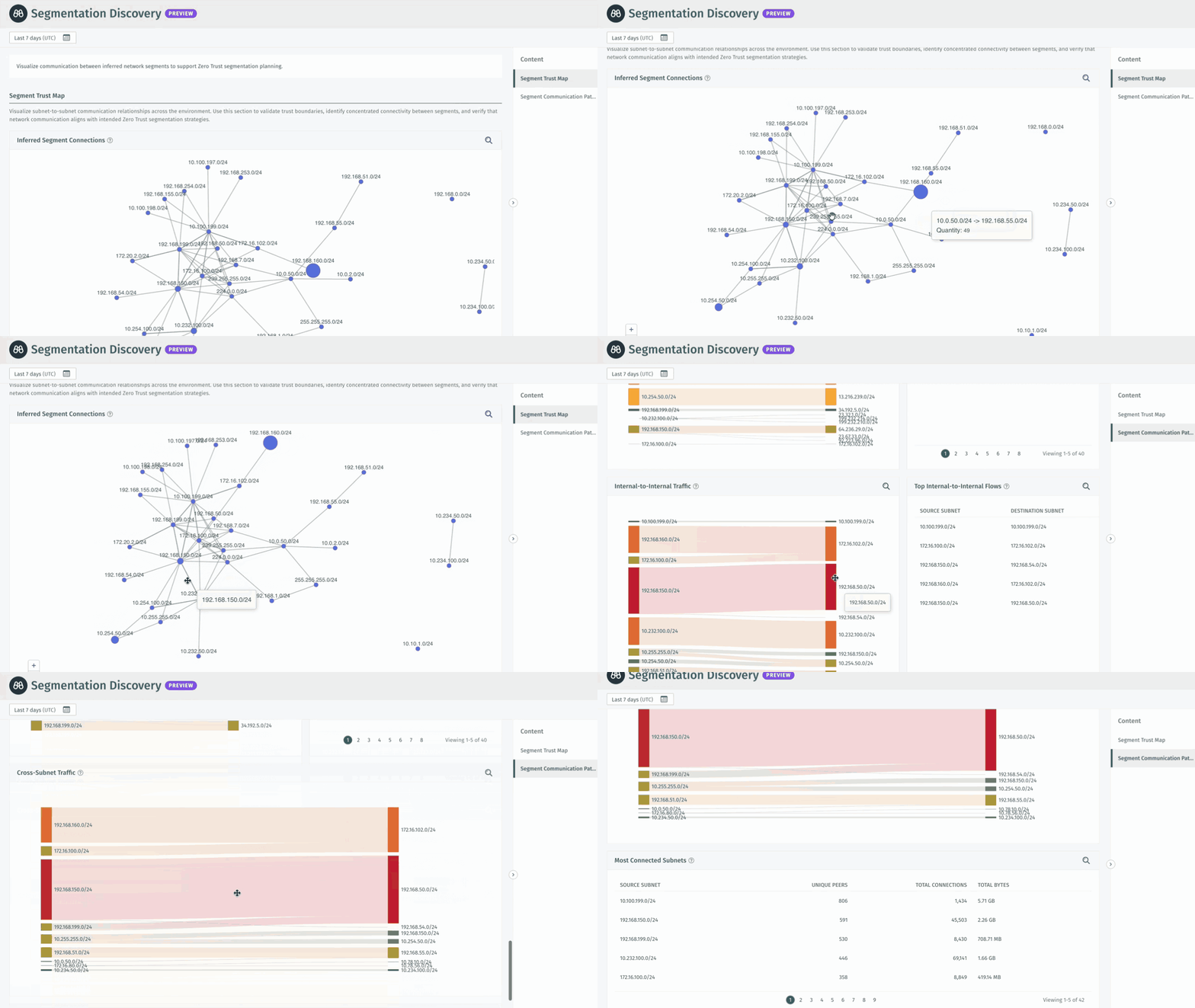
How is traffic actually flowing across the network? Where have communication patterns changed?
Turn questions into continuous visibility
The visibility a SOC needs in August is not the visibility it needed in March. A regulation lands. An acquisition closes. A new agent platform rolls out to the whole company.
So analysts can use natural language to build the security dashboards their organization actually needs, around the threats, exposures, assets, and compliance priorities that matter right now. An analyst can start with a question, turn that search into a tailored view, and make it persistent.
Observability stops being a fixed set of dashboards and becomes something the team can keep adapting as the environment, the priorities, and the threats change.
It is also how our analyst answers the question her Friday incident actually raises. Not just what did this service account do, but what else in the environment holds access like that.
3. Close attack paths before attackers reach them
One more thing worth pulling out of the Claude Mythos research.
AI does not only accelerate attacks. It accelerates exposure discovery. Periodic assessments were designed for a slower cadence. Keeping pace takes continuous visibility into the security gaps attackers are most likely to exploit.
Vectra AI Pro continuously identifies actively observed security and compliance gaps, prioritizes the exposures that matter most, recommends what to fix first, and validates remediation over time.
In practice those findings are specific: exposed RDP servers, weak TLS ciphers, clear-text passwords, deprecated protocols like SMBv1, and MCP servers exposed.
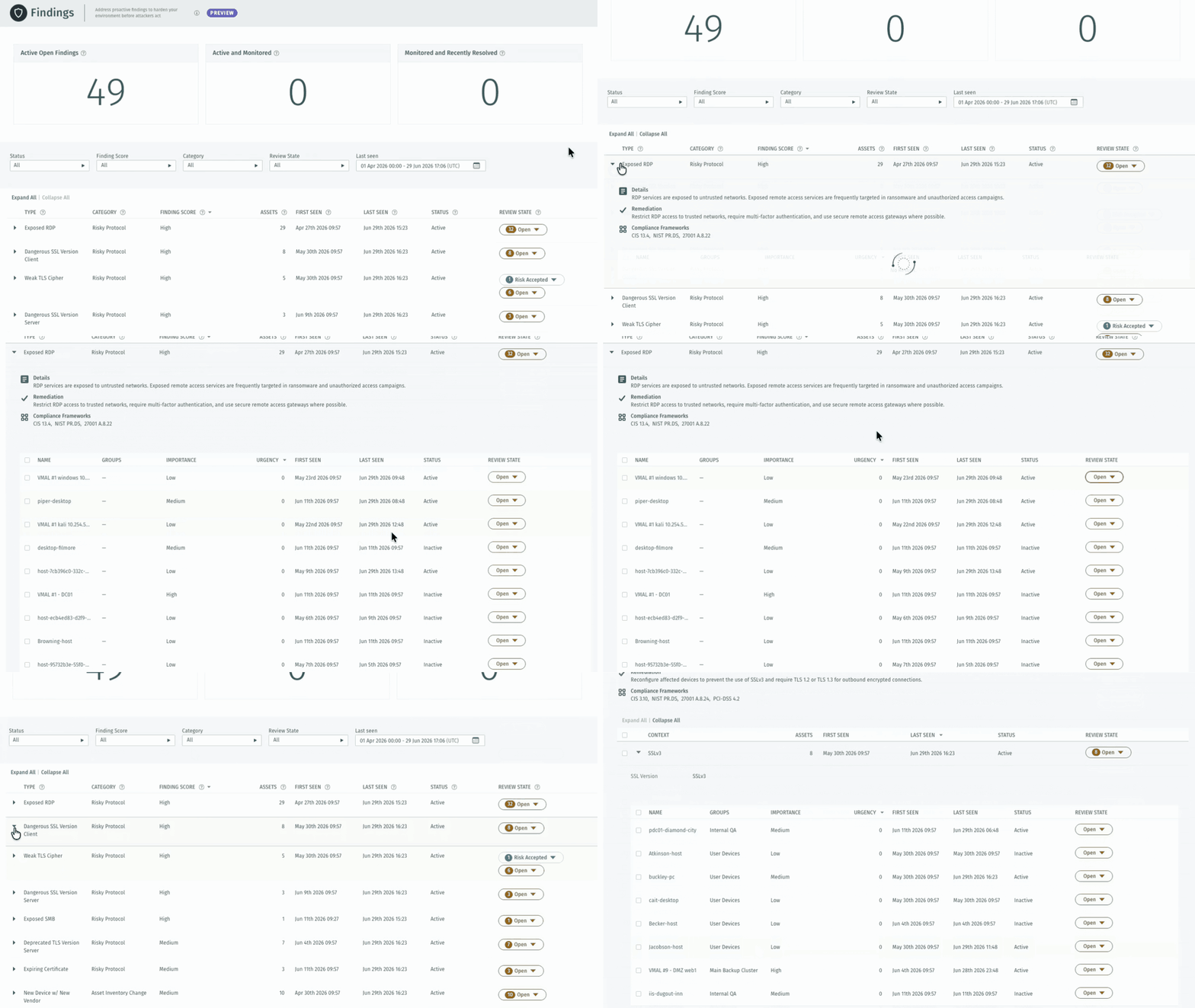
So you can answer the two questions that matter: which gaps create real opportunity for an attacker, and what should we fix first? That is how you reduce attacker opportunity before an incident begins.
Which brings us back to Friday. The reason that service account could authenticate to a host it had never touched is that it carried standing access it never needed. Responding to the alert closes the incident. Removing the access closes the path.
What defenders need: faster answers they can trust
Four questions in particular:
Who and what is operating across my environment?
Where am I exposed?
Am I under attack?
What should I do next?
That is what Vectra AI Pro is built to answer. One trusted signal, and then the speed to act on it.
“Vectra AI brings together correlated network, identity, and cloud signals with the context to understand what happened before, what happened afterwards, and the full attack story. That helps us compress investigation and response, act with greater confidence, and stay ahead of attackers.”
AJ Wiggan, Security Operations Manager, Gamma
Somewhere right now an analyst is opening a sixth browser tab. She should be reading an answer instead, at AI speed.
Ready to see what this looks like in practice?
See how the Vectra AI Platform turns behavioral understanding into trusted attack signal to help security teams see more, reduce exposure, and stop attacks faster.
See the Vectra AI Pro Platform in action →