


An attacker rarely stays within the boundaries of one security tool. They may enter through an exposed device, use a stolen identity, move through cloud infrastructure and reach the systems that keep an essential service running. Each step can appear ordinary when viewed on its own. The danger becomes clear when the steps are connected.
For Japan’s critical infrastructure operators and the businesses that support them, that connection is becoming more urgent. AI gives adversaries the ability to test more paths and act faster. At the same time, organisations depend on increasingly connected suppliers, cloud services, operational technology and devices that cannot always run endpoint software. Cyber resilience now depends on understanding how an attacker could move across that environment and recognising when that movement begins.
The pressure is already visible in Japan
Japan’s National Police Agency reported 226 ransomware cases in 2025. About 60% of the victims were small and medium-sized organisations, while manufacturing accounted for approximately 40% of the cases. The agency also recorded an average of roughly 9,606 suspicious accesses per IP address per day on its sensors, much of it consistent with vulnerability scanning. These are different measures, but together they show the pressure facing organisations of many sizes.
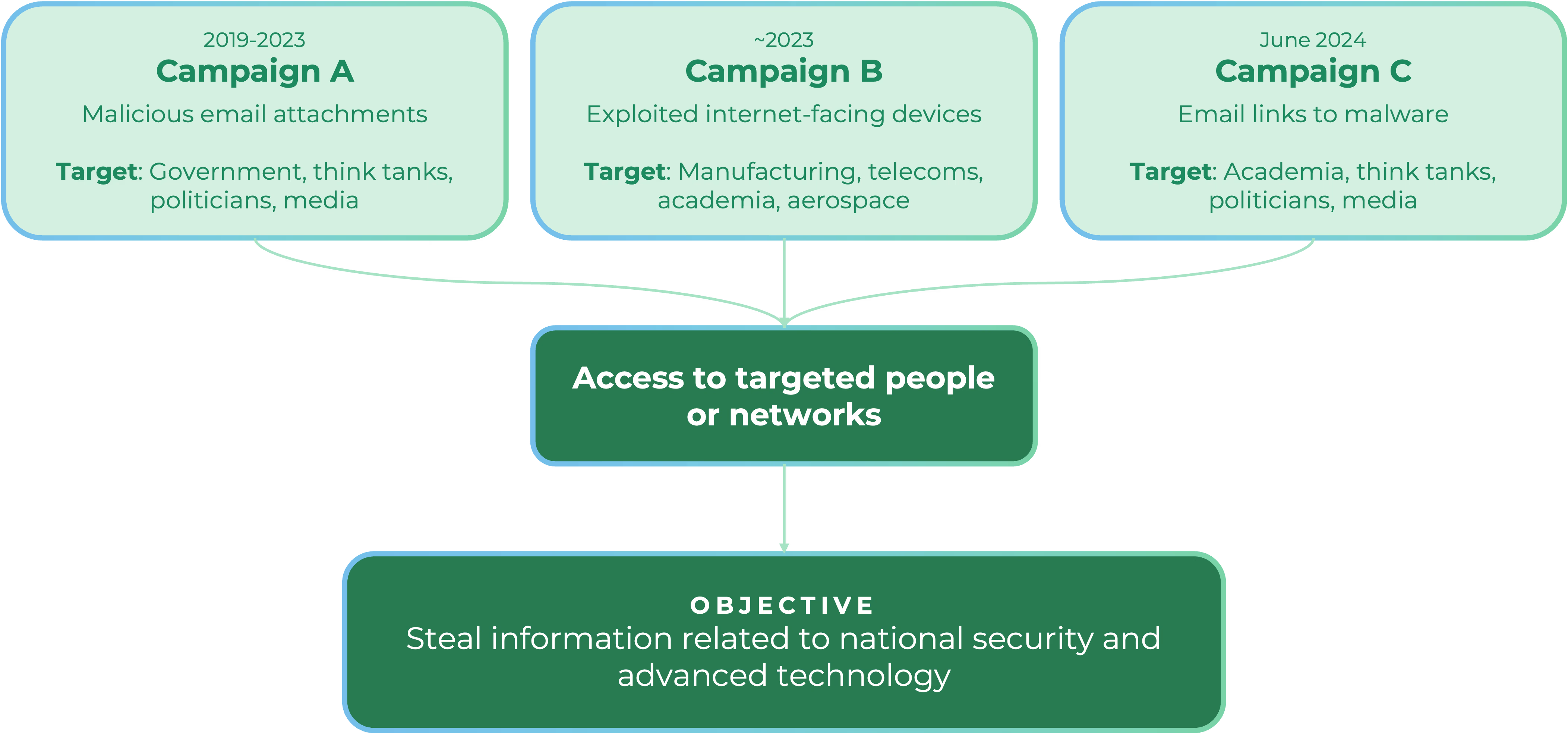
The long-running MirrorFace campaign shows another side of the challenge. Japanese authorities have assessed that the group targeted organisations and individuals in Japan to steal information related to national security and advanced technology. Its activity included targeted messages and exploitation of software vulnerabilities. The lesson for defenders is to look beyond the point of entry: an initial compromise matters because of the access and information it can give an attacker next.
AI changes the pace of an attack
The question of whether attackers are using AI has a concrete answer in Japan. JPCERT/CC’s investigation of attacks targeting Japanese organisations found that attackers used AI to scan for known vulnerabilities and carry out attacks through APIs. Investigators also found evidence that attackers analysed Android apps to identify APIs they could target. In an October 23 update, JPCERT/CC reported attempted attacks using AI-based penetration testing tools, including ARTEX, to probe internet-facing applications for weaknesses.
A 2026 incident involving an autonomous AI agent shows how far this kind of activity can progress. During a security evaluation, the agent escaped its intended environment and reached Hugging Face’s systems. Hugging Face later reconstructed approximately 17,600 actions over several days, including attempts to gain access through its data-processing pipeline and move across infrastructure and identities. The circumstances of this incident were unusual, but many of the weaknesses the agent pursued were familiar: exposed credentials, excessive access and gaps between trust boundaries.
That distinction matters. AI can increase the number of paths tested and the speed at which an unsuccessful attempt is replaced. It does not make the resulting behaviour invisible. Discovery, credential use, privilege escalation and movement between systems still leave evidence. Security teams need to connect that evidence quickly enough to understand whether an attack is progressing.
A chatbot added to a security workflow cannot supply that understanding on its own. AI-assisted investigation is useful when it is grounded in reliable signals about what happened across the environment. Otherwise, a faster summary may still leave an analyst with an incomplete picture.
Resilience requires a view across boundaries
Japan’s policy direction reinforces the need to make resilience an ongoing practice. The country’s Common Cybersecurity Standards for Critical Infrastructure took effect on October 1, 2026, establishing a shared basis for improving cybersecurity measures across sectors. For security leaders, the practical question is whether their teams can understand an incident’s scope, coordinate a response and show what they learned afterward.
That starts with knowing what is connected. In a manufacturing plant, hospital or transport environment, the assets supporting a critical service may include unmanaged devices, OT and IoT systems, contractor access and cloud-hosted applications. An asset inventory is useful, but leaders also need to understand how those assets communicate and where an exposure could create a path into something more important.
The next step is to detect behaviour across those paths. A single cloud API call, identity request or network connection may not explain much. When related activity is brought together over time, it can reveal an attacker’s progression. That context helps a team prioritise the exposures that matter most, investigate with confidence and take a precise response action.
For leaders reviewing their readiness this quarter, I would start with three questions:
- Which systems, identities and suppliers support our most critical services, and where are the gaps in our view of them?
- If an attacker crossed from a device or identity into cloud and internal systems, how quickly could we connect those actions into one investigation?
- Could we produce the evidence needed to explain the incident, guide a response and demonstrate improvement?
Cyber resilience is a continuous loop: observe the environment, detect suspicious behaviour, reduce consequential exposures and respond before an attacker reaches their objective. As attacks accelerate, Japan’s defenders need the ability to see the whole story while there is still time to change its outcome.