Monitors cloud, SaaS, and on-prem systems without relying on agents.
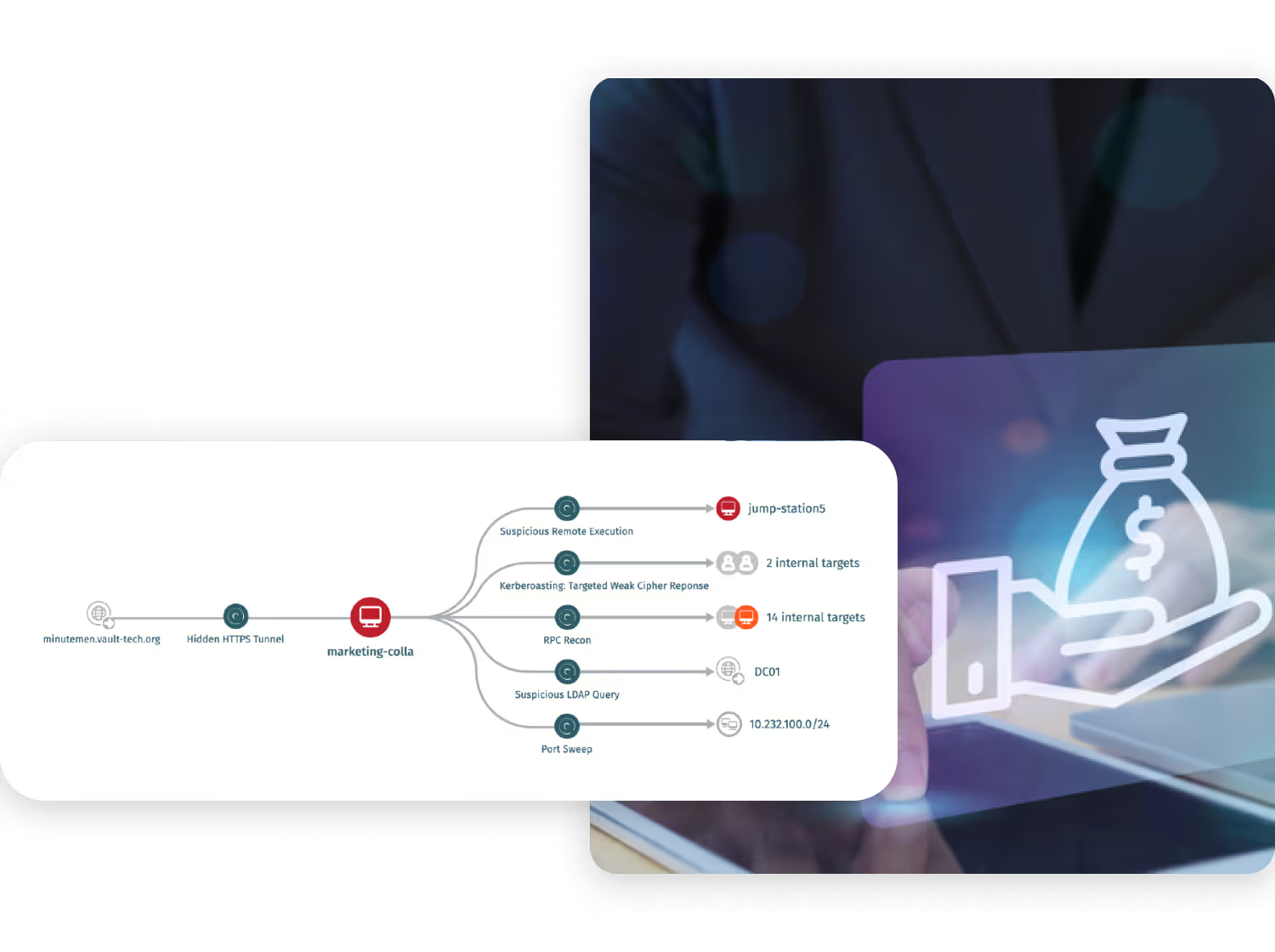
Detects privilege escalation, lateral movement, reconnaissance, and C2 behaviors that mimic legitimate financial workflows.
Correlates identity, cloud, and network behaviors into clear attack narratives so analysts can respond faster.

See how DZ Bank replaced legacy detection with behavior-based analytics to uncover encrypted, credential-driven APT activity missed by other tools.

See how Verifone reduced 438,000 alerts to just six credible incidents — freeing analysts to focus on real threats and preventing ransomware escalation.
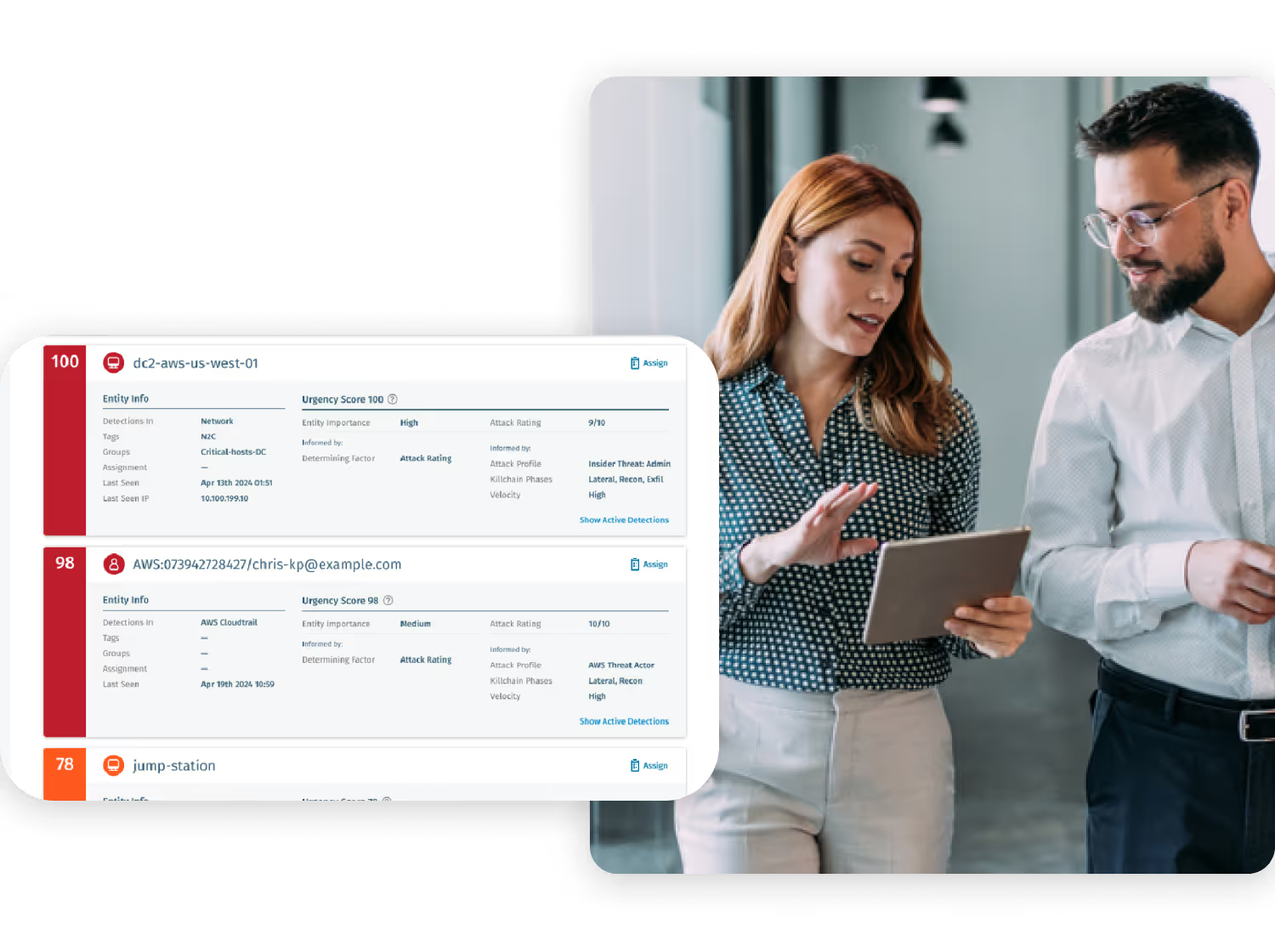
Cuts through the noise, surfacing high-fidelity signals from thousands of raw events.
Provides deep context and real-time detection to accelerate investigations and MTTR, cutting triage workloads by over 90%.
Prioritizes attacker behaviors before SIEM ingestion, reducing data sync volume and cost.
Identifies policy misconfigurations and privilege gaps across Teams, SharePoint, Exchange, and Azure AD.
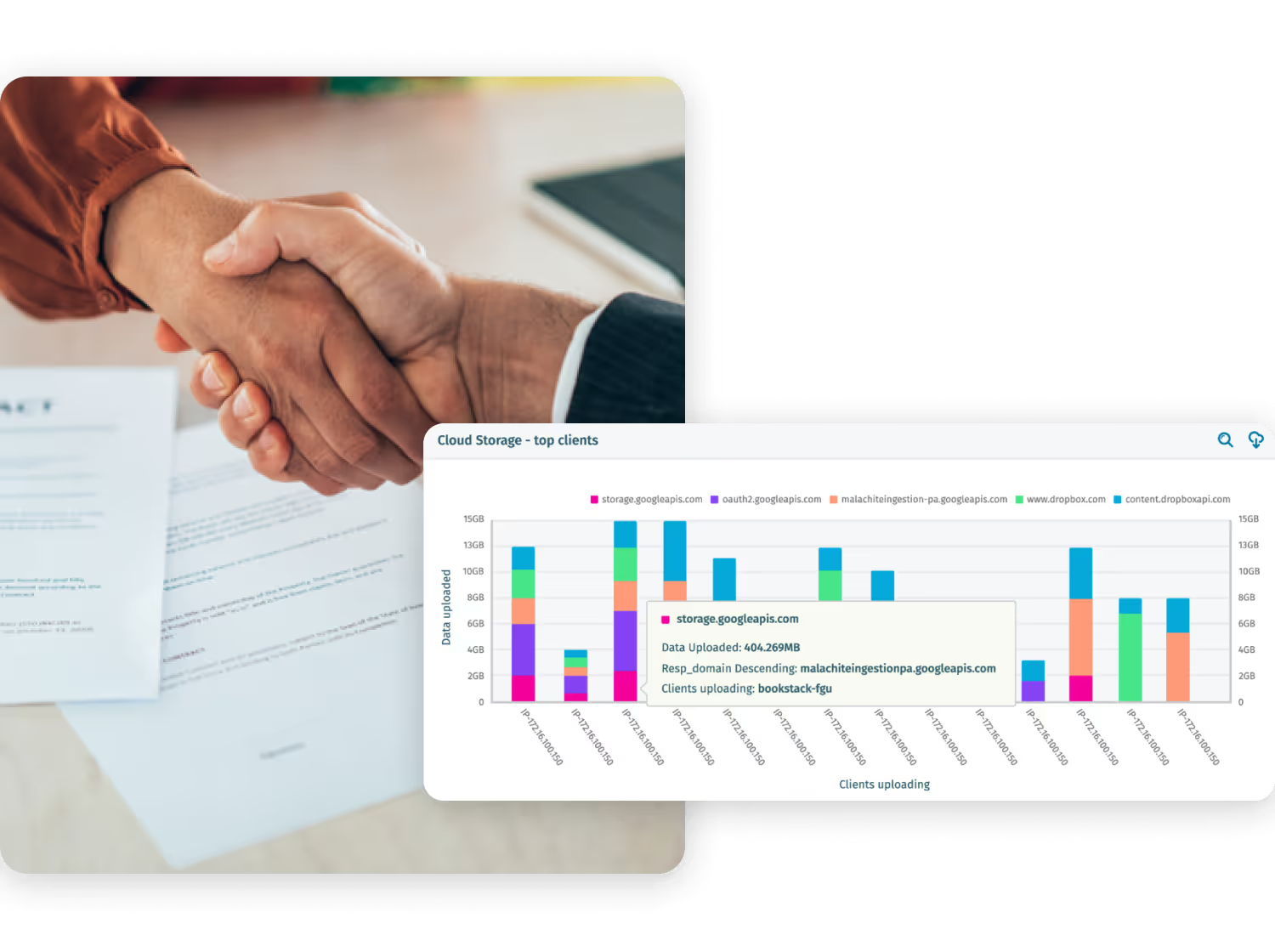
Detects suspicious user access, privilege misuse, and anomalous cloud activity indicative of BEC or account takeover.
Delivers unified behavioral visibility that stops identity compromise before it impacts customer data or financial operations.

A global financial firm using E5 and Sentinel detected 0 out of 9 red-team identity attacks — then uncovered all threats within a week of deploying Vectra AI.


Vectra AI uses AI-driven behavior detection to identify post-breach activity that traditional tools miss — like lateral movement, privilege abuse, and command-and-control traffic — across hybrid cloud and legacy environments. This gives SOC teams earlier visibility into attacks that evade rule-based SIEMs and agent-based EDRs.
Vectra AI continuously monitors identity behaviors across Microsoft 365, Azure AD, and internal infrastructure to detect misuse of valid credentials, suspicious access patterns, and privilege escalation. This helps financial institutions quickly uncover and contain identity-driven threats before they escalate.
By correlating signals across cloud, network, and identity domains, Vectra AI prioritizes real threats and slashes alert noise. Financial SOCs reduce dwell time, streamline investigations, and move from reactive to proactive response — often cutting triage workloads by over 90%.
Vectra AI provides agentless visibility across legacy systems and hybrid cloud environments, detecting threats in places that SIEMs and EDRs can’t reach. This is essential for financial organizations that rely on mainframes, COBOL applications, and aging infrastructure alongside modern platforms.
Vectra AI integrates directly with Microsoft 365 and Azure AD to monitor identity activity, detect misconfigurations, and surface anomalous access behaviors. Financial firms use this deep visibility to uncover hidden threats, enforce Zero Trust policies, and reduce risk in SaaS environments.
Unlike traditional tools that overwhelm teams with low-fidelity alerts, Vectra AI delivers attack signal clarity — distilling millions of data points into a handful of high-confidence detections. This empowers analysts to focus on what matters and accelerates time to containment.
Vectra AI helps financial institutions meet regulatory requirements by providing continuous monitoring, detailed forensic context, and audit-ready reports. With rich visibility into user behavior and threat activity, security teams can demonstrate control effectiveness and simplify compliance validation.
Vectra AI detects early indicators of ransomware and BEC — such as credential abuse, lateral movement, and anomalous email behavior — before data encryption or financial fraud occurs. Financial SOCs use these insights to disrupt attack chains early and protect sensitive assets and operations.
Get an up-close look at how leading financial institutions protect their data with Vectra AI.